


Maintaining the sand fences - June 2026
On June 11 and 12 a team of enthusiastic locals joined MHRS to reinstate and strengthen the sand fences in a vulnerable section of the Mangawhai DOC Wildlife Refuge. This area was confirmed for focus in a 2024 University of Auckland study.
The fences, totalling 275 lineal meters, take a hammering from wind and sea surge in severe Easterly storms. However MHRS and DOC are encouraged by the relative success. Improvements in design and materials will further ensure success in building a foredune strengthened by establishment of dune grasses.
The days were calm and clear and the adage "many hands make light work" meant the team was back at base by lunch.


Pre April-storm photos courtesy of Grant Douglas

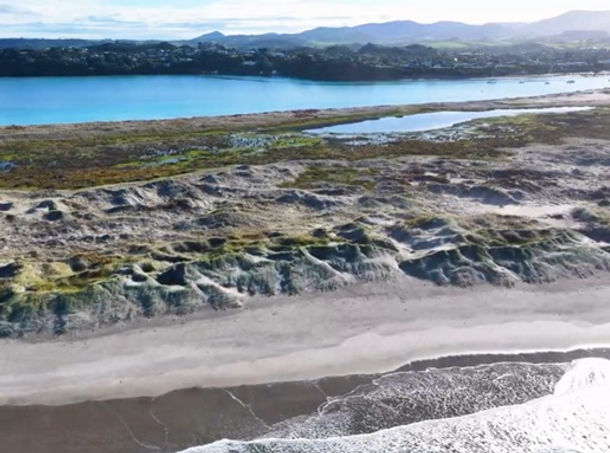
Post-April storm drone aerials by Andy Bruce, Elevated Media. In this image above, the tops of the sand fencing – in the foreground - are just visible.
24 April 2026
Weathering the Storm ⛈️
We’ve just faced a significant test with another major storm hitting Mangawhai. A powerful storm surge saw the ocean encroach upon our iconic sandspit, with seawater washing through sections of our sand fencing and overtopping the young plants.
While the force of the water was a challenge, there is a silver lining: most of our 5km of fencing held firm, and our hardy natives have proven they can handle the salt and the spray. This event is a clear reminder of why building up these "low points" is so critical- the dunes are our first line of defence.
The Fences are Winning
Despite the storm, the sand fences are doing exactly what they were designed to do. We are seeing significant sand build-up across all sites, with many reaching the very top of the fence stakes. While the DOC-mandated hessian fabric has naturally decomposed, it stayed long enough to anchor the initial drifts and provide a sheltered nursery for our plants.
The Resilience of Spinifex
Our spinifex grasses are the quiet heroes here. While many have been buried by the rapid sand build-up (and some temporarily submerged by the storm), this hardy species thrives on movement - we expect them to climb back through the new dunes soon! Those still above the surface are already showing impressive growth.
Looking Ahead
We’re not slowing down. This June, our volunteer team will maintain existing fences, repair storm-damaged sections, and increase their height to encourage a permanent, high-profile dune. In July, we’ll return for a major planting of Spinifex and Pīngao to lock that new sand in place.
Why Stabilisation Matters 🛡️
The Mangawhai sandspit has lost a staggering 420,000 tonnes of sand in just the last six years. Bare sand is defenceless against wind and rising seas, creating "low points" at high risk of a catastrophic breach.
Our mission is to target these vulnerable zones and create a living barrier. By combining 5km of sand fencing with the 150,000+ natives planted to date, we are fighting erosion and protecting the spit. Crucially, this work also helps maintain the 1996 Bund Wall - the very structure that closed the previous breach and continues to safeguard our harbour today.

The last of the sand fences for 2025
24 July 2025
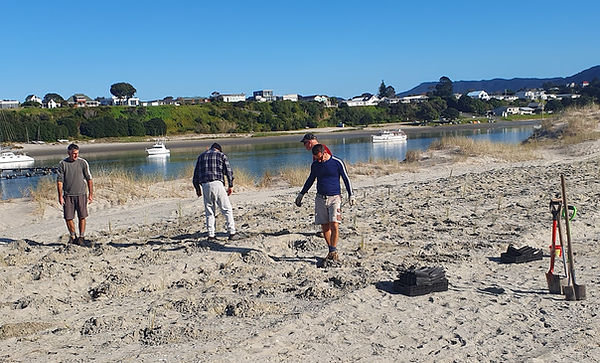
We have just completed our sand fencing and native grass planting for 2025. We were blessed with superb weather which made the work a lot more enjoyable.
A very big thanks to all the volunteers who participated in this work. I hope you all got some enjoyment out of what we did even though I am sure some of you would have felt a little sore the next day!
This year we erected some 200 metres of sand fencing, and when we inspected it over the last couple of days, I was amazed at how well these fences have trapped the sand and started building up protection for the spinifex plants that we have planted. We planted 3000 spinifex plus a trial quantity of 300 pingao plants. Hopefully we will get regular rain over the next few months so that they have good conditions to get established.
Peter Wethey - Chair
The last of the spinifex being planted behind the bund wall on top of the dredge tailings

This week's planting team after planting approx 1500 plants
30 January 2025
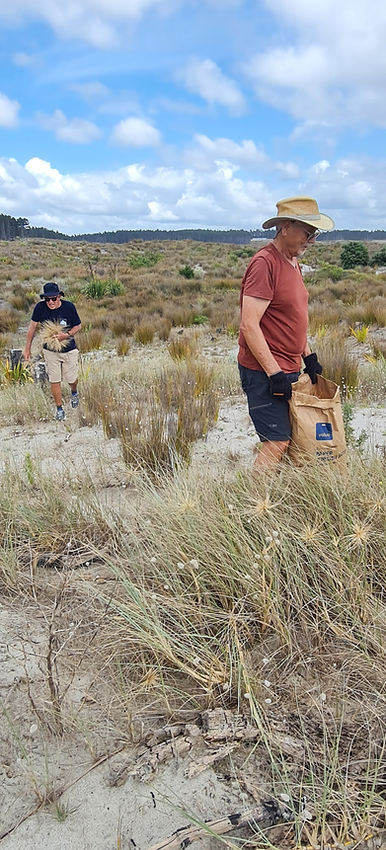
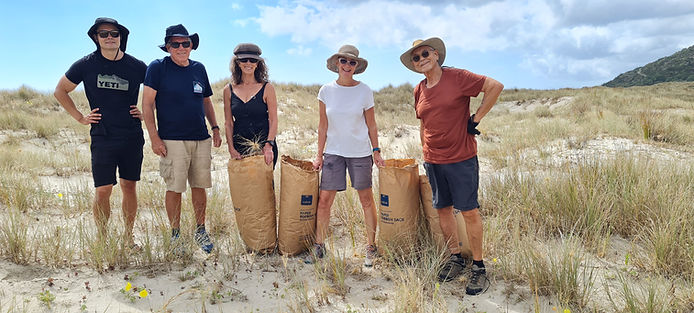
Completed collection of 10 bags of spinifex seed heads at Te Arai. These bags will contain around 2000 seed heads & Coastlands Plant Nursery at Whakatane will separate the spinifex seeds from the heads & then propagate the seed. The seeds collected this year will be available as plants in 2026. The MHRS will be planting 3000 spinifex plants on the Mangawhai distal spit this coming season to assist with the stabilising of the sand.
The collectors were volunteers from the MHRS & the Tern Point community.
PLANTING THE SANDSPIT

An iconic feature of Mangawhai
A highly visible and powerful landform, the spit's size is not readily apparent when viewed from across the estuary, but seen from elevated locations, or from on the spit itself, its scale is impressive.
Since commencement, over 100,000 spinifex and pingao have been planted on both the estuary and ocean sides of the sandspit. Net fencing has been installed by the MHRS to stabilise the sand dunes by collecting wind-blown sand drifts.
The planting and fencing programs are carried out with the support of DOC and are designed to be complimentary to the sandspit's bird sanctuary.